Real output, uncorrected
A recording in. A score out.
Press play, then look at the score underneath. Each one is the unedited output of the same transcription that runs when you upload — detected notes, measured tempo, guessed key and all.
The first 30 seconds of every recording are free, in your browser, with no account.
J.S. Bach
Invention No. 1 in C major, BWV 772
30 seconds, rendered from a public-domain MIDI file via Mutopia Project.
- Tempo
- 158 BPM
- estimated from your playing
- Key
- G major
- estimated
- Time
- 4/4
- assumed
- Notes
- 220
- 20 bars
- The time signature could not be detected, so the score is written in 4/4.
- 112 notes were shortened so each staff reads as one voice. Held notes under a moving line are the usual cause.
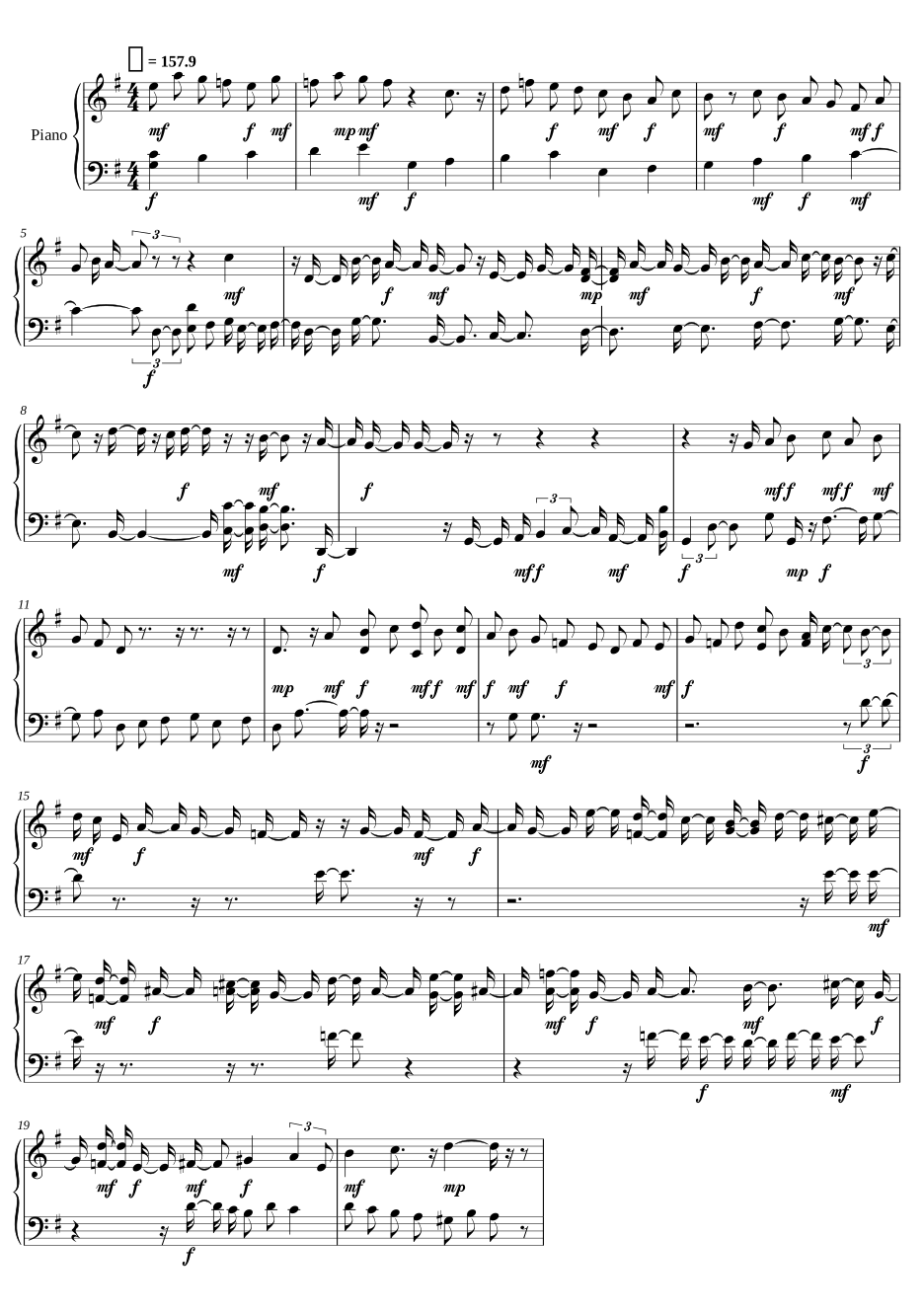
Two clean, independent voices — the easiest case there is. The tempo was measured, not assumed, and the two lines landed on separate staves the way Bach wrote them.
Two corrections are still needed, and the report flags both: the key signature came out one sharp too many (G major where the piece is in C major), and the meter could not be measured, so the score was written in 4/4 — which happens to be right.
J.S. Bach · same clip, degraded
Invention No. 1, BWV 772 — through a simulated phone mic
The same 30 seconds as the example above, band-limited and compressed to simulate a phone on the music stand — from the same public-domain MIDI file via Mutopia Project.
- Tempo
- 158 BPM
- estimated from your playing
- Key
- G major
- estimated
- Time
- 4/4
- assumed
- Notes
- 221
- 20 bars
- The time signature could not be detected, so the score is written in 4/4.
- 111 notes were shortened so each staff reads as one voice. Held notes under a moving line are the usual cause.
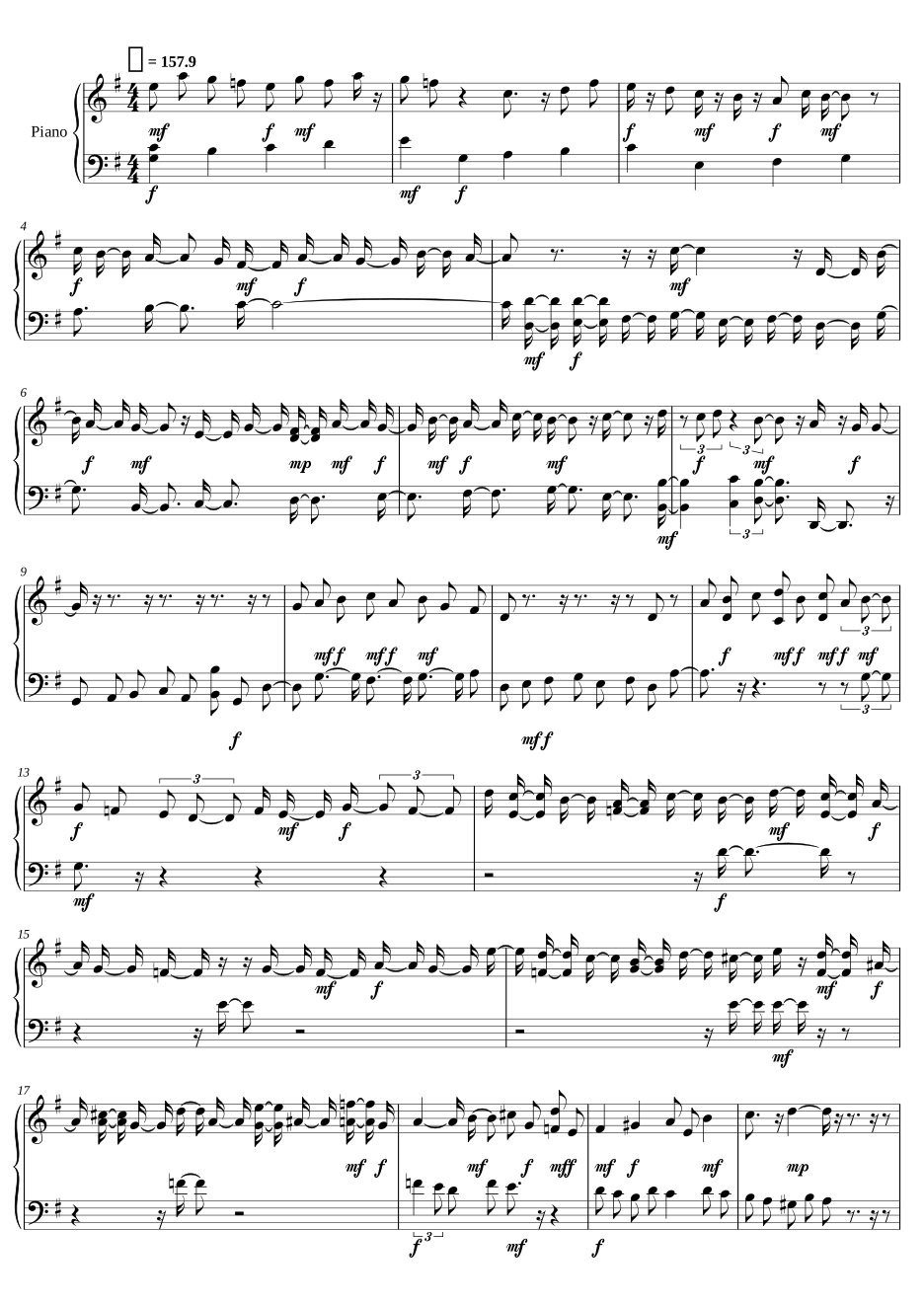
This is the clean-vs-phone comparison: the exact same 30 seconds of the same render, pushed through the phone-mic filter chain from our evaluation notes (band-limited to roughly 200 Hz–6 kHz and compressed), then through the identical transcription pipeline.
Compare the two reports and the honest answer is: barely anything moved. One extra detected note, the same measured tempo, the same wrong G-major key signature, the same assumed 4/4. On an already-clean signal, band-limiting alone is not what breaks the detector — which is what our measurements showed too. A real phone adds room echo, background noise and a wobbling mic that this simulation leaves out, so treat this as the gentle version of the problem, not the whole of it.
J.S. Bach
Prelude No. 1 in C major, BWV 846
30 seconds, rendered from a public-domain MIDI file via Mutopia Project.
- Tempo
- 120 BPM
- estimated from your playing
- Key
- C major
- estimated
- Time
- 4/4
- estimated
- Notes
- 149
- 16 bars
- 74 notes were shortened so each staff reads as one voice. Held notes under a moving line are the usual cause.
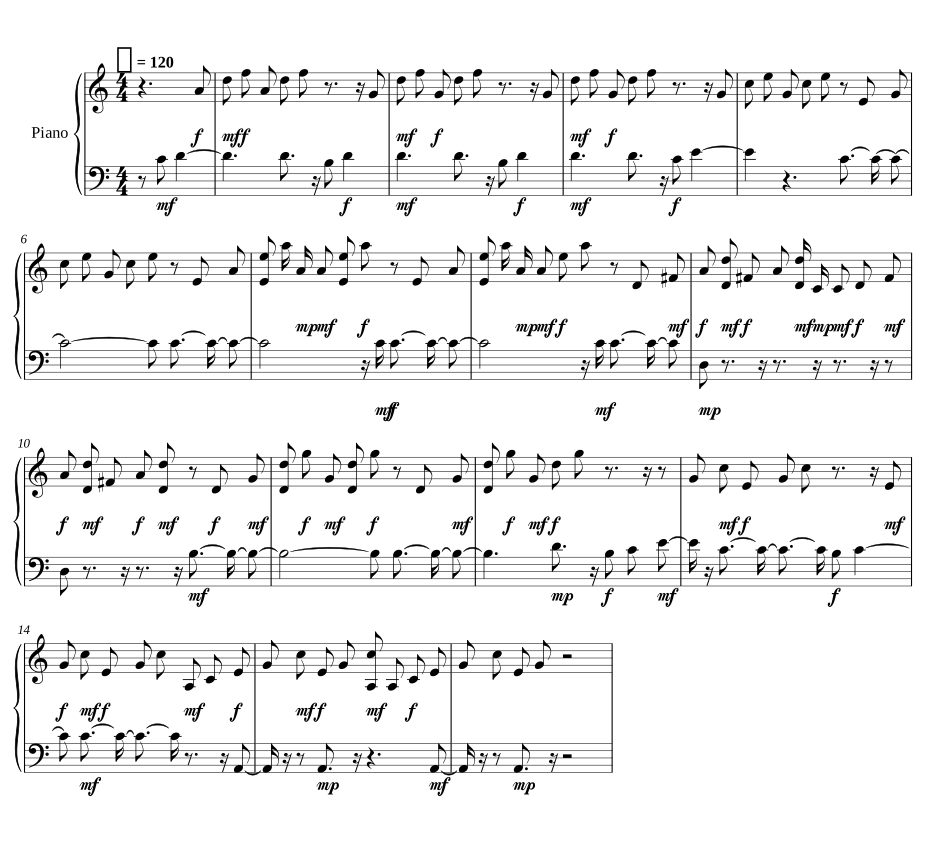
Steady broken chords from beginning to end. The C-major key and the pulse were both measured correctly.
The model detected more notes than were written — the extras are mostly octave doublings, where a piano's overtones register as a second note. They read as doubled notes in the score and are the main correction this piece needs.
Erik Satie
Gymnopédie No. 1
30 seconds, rendered from a public-domain MIDI file via Mutopia Project.
- Tempo
- 60 BPM
- estimated from your playing
- Key
- B minor
- estimated
- Time
- 3/4
- estimated
- Notes
- 61
- 11 bars
- The key signature (B minor) is uncertain; accidentals may be spelled the other way.
- 23 notes were shortened so each staff reads as one voice. Held notes under a moving line are the usual cause.
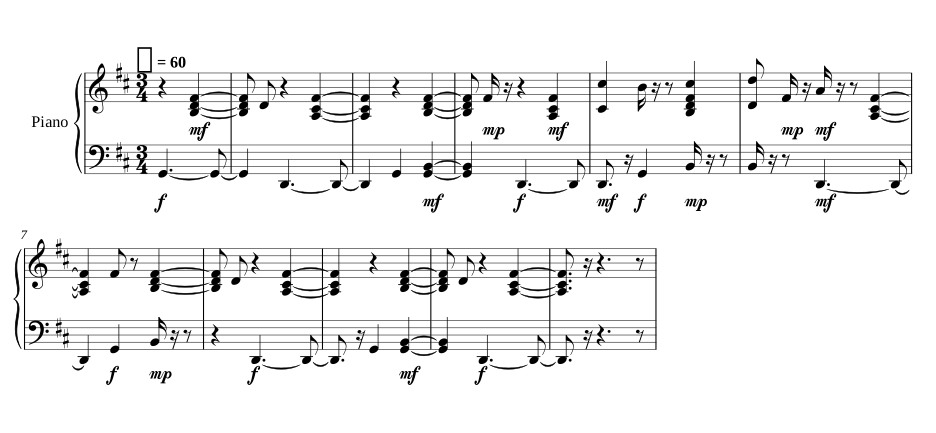
Slow and sparse. The 3/4 meter and the 60 BPM tempo were both measured with high confidence — the report shows it.
The key signature came back flagged as uncertain: the guess was B minor, while the piece sits in G major. On slow, resonant music this is exactly the kind of thing to check before printing.
Scott Joplin
The Entertainer
30 seconds, rendered from a public-domain MIDI file via Mutopia Project.
- Tempo
- 143 BPM
- estimated from your playing
- Key
- C major
- estimated
- Time
- 4/4
- estimated
- Notes
- 217
- 19 bars
- 136 notes were shortened so each staff reads as one voice. Held notes under a moving line are the usual cause.
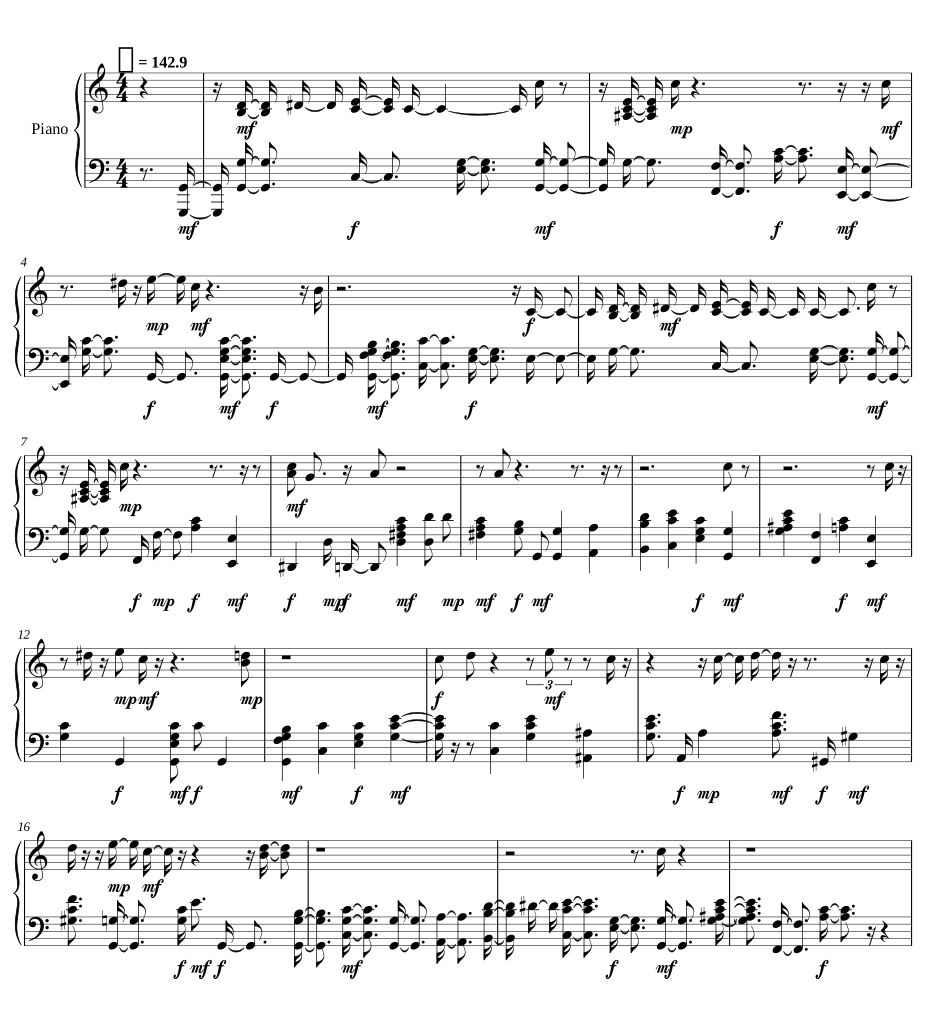
Ragtime: a syncopated right hand over a stride left hand. The C-major key signature came back correct — at the highest key confidence on this page — but the meter did not: the score is written in 4/4 where Joplin wrote 2/4, so each bar on the page spans two bars of the original.
Two honest misses to see in the report: the tempo was measured at 143 BPM, almost exactly double the written 72 — the estimator locked onto the eighth-note pulse, which in a rag is where the syncopation lives — and it detected 217 notes against roughly 324 written in this window. The report's own warning shows the strain: 136 notes were shortened to keep each staff reading as one voice.
Frédéric Chopin
Prelude in E minor, Op. 28 No. 4
30 seconds, rendered from a public-domain MIDI file via Mutopia Project.
- Tempo
- 111 BPM
- estimated from your playing
- Key
- C major
- estimated
- Time
- 4/4
- assumed
- Notes
- 181
- 14 bars
- The time signature could not be detected, so the score is written in 4/4.
- 28 notes were shortened so each staff reads as one voice. Held notes under a moving line are the usual cause.
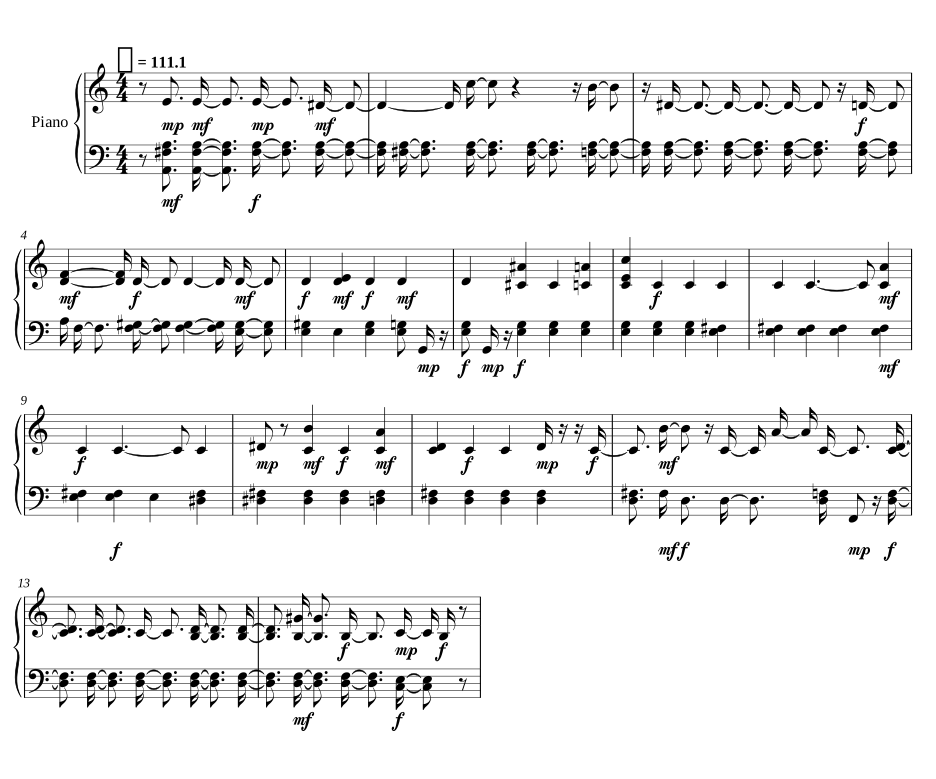
Slow, chordal, all held lines — the opposite of the Joplin. The detected note count landed almost exactly on the written one for this window, though matching a count is not the same as matching the notes, and 28 of them still had to be shortened to keep the staves readable.
Two things to check before printing. The key came back C major — the piece is in E minor, so the sharps appear as accidentals, and unlike the Satie this wrong key produced no warning at all. And the meter could not be measured, so the score went out in assumed 4/4; the original is alla breve (2/2), the same total bar length, so the notes still line up. The tempo, measured at 111 BPM, is about double the source file's 56 — the slow pulse hid behind the eighth notes again.
How these were made
The recordings are public-domain scores from the Mutopia Project, played by a sampled piano (FluidSynth and the FluidR3 soundfont) — chosen so we can show you real input audio without publishing anyone's copyrighted recording. They are cleaner than a phone on a music stand, so treat them as a best case, not a promise. The one exception is the second Bach Invention above: the same rendered clip pushed through a phone-mic simulation — band-limited and compressed, the same chain our evaluation notes use — so you can compare clean and degraded output from identical input.
Each file then went through the same chain the tool runs on your recording: Spotify's Basic Pitch model detects the notes, our own pipeline measures tempo and key and writes the notation, and Verovio engraves it. Nothing was corrected by hand — the wrong key signature in the Bach Invention above is really what it produced.
The best test is still your own recording: upload a piano recording and hear the first 30 seconds transcribed for free. Our notes on what the model does and doesn't hear go deeper into where corrections come from.
Your recording, on paper.
The first 30 seconds are free, in your browser, with no account. Then $4.99 per piece, or $9.99 a month unlimited.