Explainers
Does a CCLI License Cover Arrangements?
Only in a narrow case. CCLI's own wording on custom arrangements, what "published version is unavailable" leaves open, and when to ask the owner instead.

By Antoine Duno
Updated November 10, 20268 min read
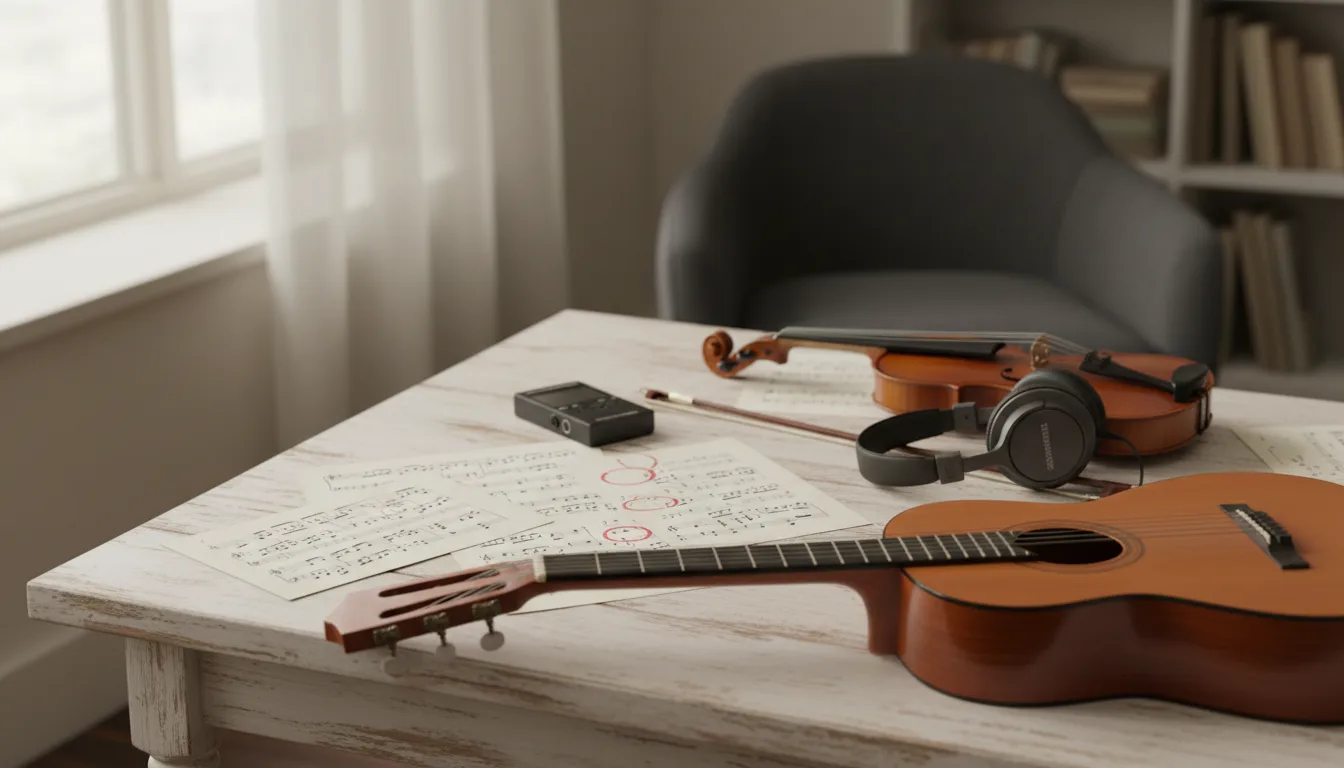
Worship teams arrange songs every week: a lower key, a shorter intro, a piano part the keys player can actually play. Most of that is fine. Writing that arrangement down and handing out copies is where the CCLI licence has a specific rule, and it is narrower than many churches assume.
This page describes what CCLI publishes. It isn't legal advice: your church's own agreement, and CCLI, are the authority for your situation.
What CCLI's summary says, clause by clause
These quotes are from the Church Copyright License Summary on CCLI's US site. The summary itself says "If any provision of this summary conflicts with the terms of the Agreement, the Agreement controls."
| Clause | CCLI's wording (US summary) | What it means for arrangements |
|---|---|---|
| Arrangements allowed | "only where a published version is unavailable you may: Make customized vocal and/or instrumental arrangements of Songs" | Your own chart or part is covered only when no published one is available |
| Rights stay with the owner | "provided that you ensure that all rights in Copies made under this provision are reserved by the copyright owner" | The arrangement isn't yours to publish or license |
| No changes to the song | Not permitted: "Altering or changing the lyrics, melody or fundamental character of any Song" | Arranging accompaniment isn't rewriting the tune or the words |
| No copying sheet music publications | Not permitted: "Copying or duplicating choral sheet music, cantatas, musicals, handbell music, keyboard music or arrangements, vocal solos, instrumental works or music education publications in any form" | A published piano book is bought, not photocopied |
| No fees | Not permitted: "Charging a fee or receiving any form of compensation" for permitted activities | You can't sell the chart |
| Church use only | Not permitted: "Distributing Copies of Songs for use outside of Church Services" | No passing it to another church or posting it publicly |
| Covered songs only | Validate each song "before reproducing it" | Check SongSelect or the Covered Catalogs list first |
The three conditions, from CCLI's help centre
CCLI's help article "Do I need a license to score music by hand?" puts the arrangement provision as a checklist. Creating your own arrangement is covered "as long as: 1) the song is authorized, 2) it is to be used to assist the congregation, and 3) there is no published version of the music available." Then: "If all points do not apply, you would need to contact the song's copyright owner for permission."
1. The song is authorized. The summary tells churches to search SongSelect, ticking "Expand search to show all songs" if needed, and adds: "If you don't find a match, it's likely the song is not covered by the Program." For an uncovered song, CCLI's help says to "contact the publisher or owner for permission". Our guide to a song not on SongSelect walks through that search, including the expanded-search box.
2. It assists the congregation. The licence is built around congregational worship. Sharing an arrangement outside services, or with another church, falls outside it.
3. No published version is available. This is the condition that decides most cases, and the one CCLI defines least.
"Published version is unavailable": what's settled and what isn't
CCLI's summary doesn't define "published version", and we didn't find a CCLI page that does. What the wording supports:
- If the publisher, SongSelect or another authorized seller offers an arrangement, a published version is available. The licence text then doesn't cover making your own, even if the published one is in the wrong key or too hard for your pianist.
- If a song is covered but no chart or sheet music exists anywhere authorized, the provision is written for exactly that case. Our PraiseCharts gap guide covers how to check the catalogues before concluding nothing exists.
- A free chord site isn't a published version in this sense, since CCLI's help centre says the licence covers sheet music and lyrics "downloaded from websites which are authorized by the song owners to provide those resources."
What stays open: whether a lead sheet counts as a published version of a piano arrangement, or whether a chart in one catalogue you don't subscribe to makes a version "available". The summary doesn't say. When a specific song is on the line, CCLI's customer service, or the publisher, can answer for that song; we can't.
Arranging a song vs changing it
CCLI draws this line more clearly than the published-version one. In its answers to the questions it hears most, it says "you are free to arrange songs as you wish, as long as you don't change the melody or lyrics, or the fundamental character of a song." Its examples: start with the chorus or the bridge, and skip verses.
Changing words is a different matter. CCLI's answer to "Can we change lyrics?" is "The simple answer is no—not without permission from the song owner", because "One of the exclusive rights of a copyright owner is over derivative works." Its help centre goes further: "if you wish to make any changes, however small, you should seek direct permission from the copyright owner." Public-domain songs are the exception.
So a church can usually:
- play a song in a different key,
- reorder or drop sections,
- choose its own instrumentation in a live arrangement,
and needs the owner's permission to:
- alter the lyrics or add verses,
- change the melody,
- turn the song into something of a different character.
Your country's licence text may differ
CCLI's summary pages show different wording depending on where you're reading from. Re-reading them on 19 September 2026, we found three versions of the arrangements rule.
- US and Canada (the version quoted above): a church may make customized arrangements "only where a published version is unavailable".
- UK and Ireland (CCLI's UK summary): the same published-version condition, spelled "customised", with its own list of things not permitted that includes copying "keyboard arrangements".
- Germany, Switzerland, the Netherlands, Sweden and Europe (a separate version on the US page, marked for those countries in the page's own markup): it lists making "customized vocal and/or instrumental arrangements" among things not allowed "without explicit permission from the rights holder".
That is one reason quotations of the CCLI summary online don't always match, and it means this page's advice is the US and Canada reading unless we say otherwise. We did not find arrangements wording for other regions, and this is not a complete map. Read the summary on your own country's CCLI site, and your agreement.
When the arrangement is allowed, writing it down
Suppose the song is covered, no published arrangement exists, and your keys player has worked out a part the band now relies on. The practical question becomes how to get it on paper so a sub can play it next month.
Recording the part is the easy step. Turning a recording into notation is slower by hand, and it's where a transcription tool can give you a start: record the keys player playing the arrangement alone, then correct the draft in notation software. With Piano to Sheet Music you upload solo piano audio and get a PDF, MIDI and MusicXML of the notes played. It doesn't write chord symbols or lyrics, so a chord chart or lead sheet for singers still needs those added by hand.
Then put CCLI's credit line on the page, in the form the summary shows: song title, "words and music by" the writers, the copyright notice, "Used by Permission" and your church's "CCLI License #". CCLI notes that number is "your church's license number, not the song's CCLI ID number."
Songs your team wrote
None of this limits a writer's own song. The arrangement clause is about copying songs other people own under your church's licence. If the copyright owner is on your team and agrees, the chart is theirs to make, and charting an original worship song covers that job. Who owns what, including the difference between the song and a recording of it, is set out in musical work vs sound recording.
Frequently asked questions
Does a CCLI license let our church make its own arrangement of a song?
Only in a narrow case. CCLI's US Church Copyright License summary lets a church make customized vocal or instrumental arrangements of covered songs only where a published version is unavailable. CCLI's help centre adds that the song must be authorized and the arrangement used to assist the congregation. Otherwise the church needs permission from the song's copyright owner.
What does "where a published version is unavailable" mean?
CCLI's summary doesn't define it. The plain reading is that no published arrangement of the song is available to you, for example from the publisher, SongSelect or another authorized source. If a published version exists but doesn't suit your team, the licence wording doesn't cover making your own; ask the copyright owner, or ask CCLI about your specific case.
Can we change the key, skip a verse or repeat the chorus under CCLI?
Yes. CCLI's own answer says churches are free to arrange songs as they wish, as long as they don't change the melody, the lyrics or the fundamental character of a song. It gives starting with the chorus or bridge and skipping verses as examples. Changing any words needs the song owner's permission, even a small change.
Can we photocopy a published keyboard arrangement under CCLI?
No. The US summary lists copying or duplicating keyboard music or arrangements, choral sheet music, cantatas, musicals, vocal solos and instrumental works among activities not permitted. The licence covers copying songs from hymnals, websites and similar publications for congregational singing, not duplicating sheet music publications. Buy the copies you need, or ask the publisher.
Can we sell or share an arrangement we made under CCLI?
No. The summary says rights in copies made under the arrangement provision are reserved by the copyright owner, and it bars charging a fee for permitted activities, transferring rights to another church, and distributing copies for use outside church services. An arrangement made under your licence stays inside your church's use.
Sources
- CCLI: Church Copyright License Summary (US)
- CCLI: Church Copyright Licence Summary (UK)
- CCLI: Church Copyright License (US)
- CCLI: The five questions we hear the most
- CCLI Help: Do I need a license to score music by hand?
- CCLI Help: Can churches make their own arrangements or scores of songs?
- CCLI Help: Are we allowed to change the words of a worship song or hymn, or add new verses?
- CCLI Help: Can we use a song if it isn't covered by CCLI?
- CCLI Help: Does our Church Copyright License permit us to use songs or sheet music downloaded or copied from the internet?
CCLI pages checked 16 September 2026; the US and UK summary pages and the CCLI help pages on scoring music by hand and on the five most common questions were re-read on 19 September 2026. This is a summary of CCLI's published wording, not legal advice.
Keep reading
Song Not on PraiseCharts? Chart It From the Recording
When PraiseCharts doesn't carry the song: request it, order a custom chart, or write your own from the recording, and what a CCLI licence allows.
14 min read
Song Not on SongSelect? Your Team's Options
Song missing from SongSelect, or listed with no chord sheet? What CCLI says to check, when the licence lets you make your own chart, and how to build it.
9 min read
Charting an Original Worship Song for Your Team
Your team wrote the song, so no catalogue has a chart. Who owns it, which charts to make, how to build them from a recording, and CCLI registration.
10 min read
Chord Chart vs Lead Sheet for Worship Keys
A chord chart gives lyrics and chords, a lead sheet adds the melody on a staff, and neither is a piano part. Which one each player on your team needs.
10 min read
Choir Accompaniment From a Rehearsal Recording
Get your accompanist's part onto paper: why the full rehearsal take is the wrong source, recording in an echoey church hall, and the CCLI limits.
9 min read
What Is MusicXML? The Format for Editable Scores
MusicXML explained from the spec: what a .musicxml or .mxl file stores, how it differs from MIDI and PDF, version 4.0, and which programs open it.
7 min read