Scores for Piano Exams, Auditions and Competitions
Own-composition and submission rules from ABRSM, Trinity, RCM and exam boards, and how to get a clean score in on time.
Own Compositions in Piano Exams: Rules by Board
Which piano exam boards accept your own composition, and what score each wants: ABRSM, Trinity, LCM, AMEB and RCM, quoted from the current syllabuses.
13 min read
AMEB Piano for Leisure: Own Composition Rules
Where AMEB lets a student play their own composition or arrangement in Piano for Leisure, what the public pages leave out, and what score to prepare.
11 min read
LCM Piano Own Composition: 2021 vs 2026 Syllabus
LCM's 2026 piano syllabus drops Leisure Play, the route that allowed your own composition. What the 2021 syllabus allows until July 2027, and what's left.
13 min read
NFMC Junior Composers Contest: Score and MP3 Rules
What the NFMC Junior Composers Contest asks for in 2027: a PDF score with the right header, an MP3, file names, age classes and the February 1 deadline.
13 min read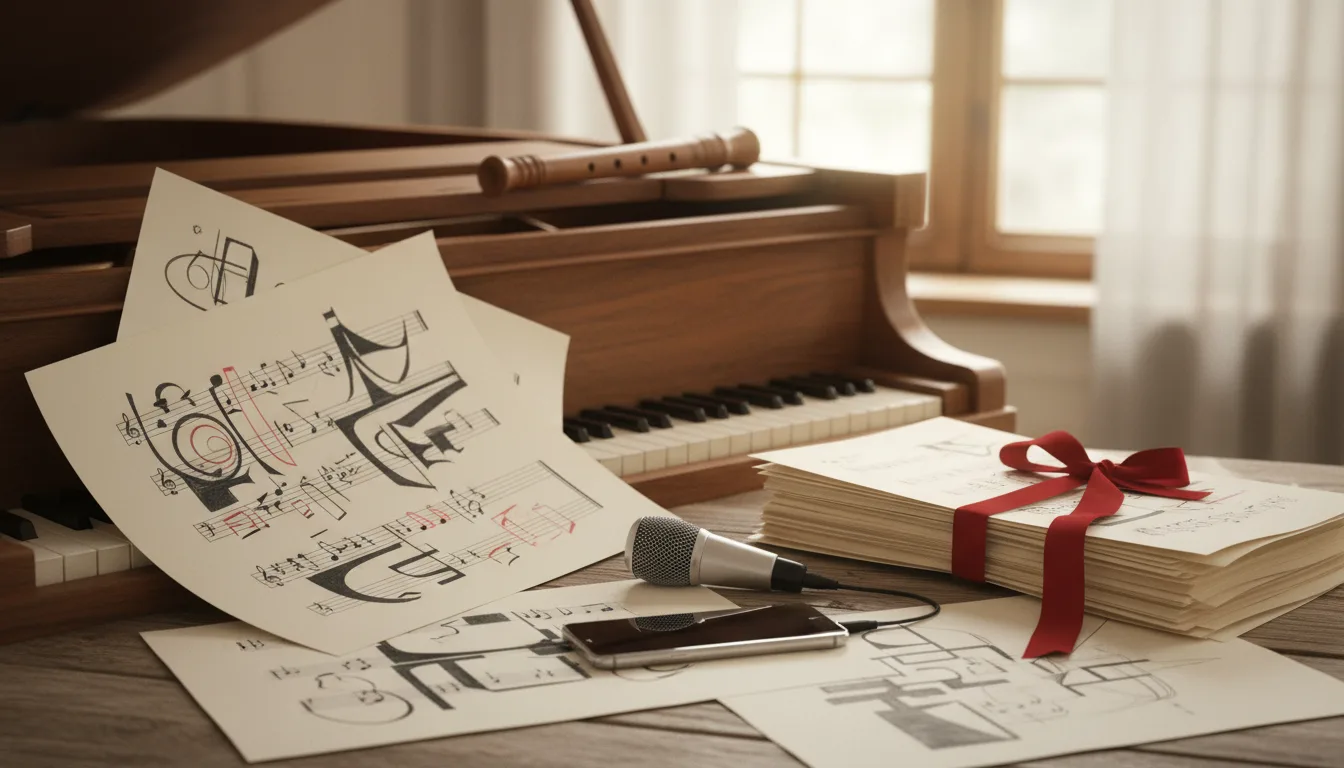
Trinity Piano Own Composition: Notation by Grade
Trinity accepts a lead sheet or graphic score for an own composition up to Grade 5, and staff notation from Grade 6. The rules, durations and upload steps.
11 min read
RCM Piano Exams: Own Choice Pieces and Scores
RCM's Piano Syllabus has no own-composition option. The substitutions it does allow, the published-edition rule, and the request-form deadline.
12 min read
Composition Portfolio for College: Score Rules
How many scores, what format, and whether MIDI recordings count: composition portfolio rules from BU, Indiana, Michigan, CMU and MSM for fall 2027.
11 min read
ABRSM Own Composition: Getting a Legible Score
ABRSM asks for a legible, fully-notated score of your own composition. Here is the exact wording, what it means, and how to get there from a recording.
9 min readAbout this topic
Exam boards, auditions and competitions increasingly ask for a written score alongside a performance, especially for own-composition and free-choice pieces. The rules on what that score must show, and how it must be submitted, differ from one board to the next and change from year to year.
The articles here gather those requirements with links to each board's own published syllabus, so you can check the current wording yourself. They also cover the practical route from a recording of your piece to a clean, legible score, and the details examiners notice first: clear hand assignment, consistent notation and a readable layout.